Countdown:
Abstract submission due:
November 15, 2026
Abstract acceptance due:
December 15, 2026
Conference date:
February 26-28, 2027
-
General Chair
-
Email:
-
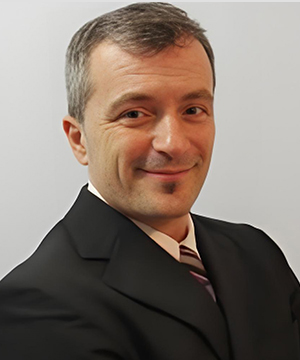
Carlos M. Travieso-González: Professor, Signals and Communications Department (DSC), Institute for Technological Development and Innovation in Communications (IDeTIC), University of Las Palmas de Gran Canaria (ULPGC), Las Palmas de Gran Canaria, Spain.
Research field: Biometrics; Biomedical Signals; Data Mining; Classification System; Signal and Image Processing; Environmental Intelligence.
Prof. Carlos M. Travieso-González received the M.Sc. degree in 1997 in Telecommunication Engineering at the Polytechnic University of Catalonia (UPC), Spain; and a Ph.D. degree in 2002 at the University of Las Palmas de Gran Canaria (ULPGC-Spain). He is a Full Professor and Head of the Signals and Communications Department at the University of Las Palmas de Gran Canaria (ULPGC). He has been a faculty member at ULPGC since 2001, teaching signal processing, biomedicine, pattern recognition, and learning theory. His research interests encompass biometrics, biomedical signal and image processing, data mining, classification systems, machine learning, and environmental intelligence. He has researched in more than 53 International and Spanish Research Projects, some of them as head researcher. He is co-author of 4 books, co-editor of 25 Proceedings Books, and Guest Editor for eight JCR-ISI international journals and up to 24 book chapters. He has over 510 papers published in international journals and conferences (112 indexed on JCR – ISI - Web of Science). He has published 7 patents in the Spanish Patent and Trademark Office. He has been a supervisor on 13 PhD Thesis (7 more are under supervision) and 150 Master Thesis. He is the founder of The IEEE IWOBI conference series and President of its Steering Committee, The InnoEducaTIC conference series; and The APPIS conference series. He is an evaluator of project proposals for the European Union (H2020 and Horizon Europe), Medical Research Council (MRC – UK), Spanish Government (ANECA and AEI), Research National Agency (ANR – France), DAAD (Germany), The Ministry of Investments at Slovak Republic (MIRDI), Latvian Council of Science (LZP), Croatian Science Foundation (HRZZ), Expert for MSCA (Slovenia, France), Argentinian Government and Colombian Institutions. He has been a reviewer in different indexed international journals (<70) and conferences (<270) since 2001. He has been a member of the IASTED Technical Committee on Image Processing since 2007 and a member of the IASTED Technical Committee on Artificial Intelligence and Expert Systems since 2011. He will be APPIS 2027 General Chair and was General Chair in APPIS 2026, CAIP 2025, APPIS 2025, APPIS 2024, APPIS 2023, APPIS 2022, APPIS 2020, IEEE-IWOBI 2020, APPIS 2019, IEEE-IWOBI 2019, IEEE-IWOBI 2018, APPIS 2018, InnoEducaTIC 2017, IEEE-IWOBI 2017, IEEE-IWOBI 2015, InnoEducaTIC 2014, IEEE-IWOBI 2014, IEEE-INES 2013, NoLISP 2011, JRBP 2012 and IEEE-ICCST 2005.
-

Alan Wang: Associate Professor, University of Auckland, New Zealand.
Research field: Bioengineering; Signal Processing; Data Informatics; Machine Learning; Biomedical Statistics and Simulation.
Alan Wang is a principal investigator and Associate Professor at University of Auckland. He has more than ten years of research experience in bioengineering informatics and integrated medicine, especially in advancing the role of medical informatics in health care. He has developed advanced data analytics methods for intelligent health and personalized diagnosis and prognosis based on signal processing and machine learning theories. He has experience analyzing huge cohorts of data with applications of early diagnosis, disease understanding, and effective treatment of patients with different disorders. He serves as an Editorial Board Member and an Active Reviewer for several international journals.
-
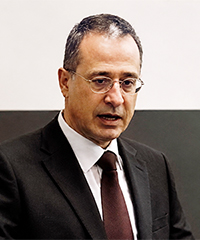
Vladan Radosavljevic: Professor, Military Medical Academy, Serbia.
Research field: Urinary Screening; Chemical Carcinogens; Malignant Diseases; Non-communicable Diseases.
Prof. Radosavljević invented, formulated, and published: 1) Radosavljević's urinary screening of biomarkers of chemical carcinogens; and 2) the Radosavljević–Belojević method of epidemic differentiation. He graduated (1991), specialized (1995), and received his doctorate (1999) in epidemiology at the Medical Faculty of the University of Belgrade, Serbia. He was the head of the Department of Epidemiology and deputy director of the Military Institute for Preventive Medicine in Belgrade from 2003 to 2010, and head of military preventive medicine from 2010 to 2020 in the Ministry of Defense of Serbia. In 2020 he moved to the Institute of Epidemiology of the Military Medical Academy, Belgrade, where he works as an expert epidemiologist. He was a professor at the Biological Weapons course at the Military Academy of the University of Defence in Belgrade and a research associate at the Epidemiology course. Since 2015, Dr. Radosavljević has been a United Nations expert on biological weapons within the mechanism of the United Nations Secretary General.
-
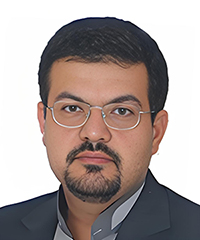
Ata Jahangir Moshayedi: Senior Member of IEEE, Associate professor, Jiangxi University of science and Technology, China.
Research field: Robotics; Autonomous Guided Vehicles (Agvs); Smart Farming; Food Delivery; Elderly Care.
Ata Jahangir Moshayedi holds a Ph.D. in Electronic Science from Savitribai Phule Pune University (formerly the University of Pune), India. He is a Senior Member of IEEE, a Professional Member of ACM, and a Life Member of the Instrument Society of India.Dr. Moshayedi has published over 100 research papers, authored 4 books, contributed to 4 book chapters, and holds 2 patents and 16 copyrights. He actively serves as a technical program committee member and session chair for numerous international conferences.
-
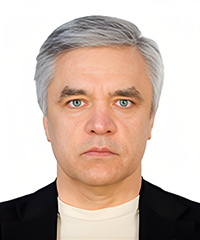
Sergey Suchkov: Professor, N.D. Zelinskii Institute for Organic Chemistry of the Russian Academy of Sciences, Russia.
Research field: Immunochemical characteristics of three novel reina-specific antigens in humans and some mammals; Serology in ophthalmic oncology - findings and outlook for the future; Catalytic antibodies in immune-mediated disorders; Clinical and immune-mediated syndro.
Sergey Suchkov, graduated from Astrakhan State Medical University with MD in 1980. From 1980 through 1983 has been working as Res Associate, and from 1983 through 1985 as Senior Res Associate at the Inst of Medicical Enzymology, USSR Academy of Medical Sciences. In 1985, maintained his PhD at the Sechenov University. From 1986 through 1994 was a Senior Res Associate at a variety of the Research Institutions and Universities in Moscow. In 1989-1993, was trained at the NEI, NIH, Bethesda, MD, USA, and Wills Eye Hospital, Philadelphia, PA, USA, as well as at some of the British universities on the invitation of the Royal Society for Immunology. From 1994 through 2006, was a Director of the Division for Clinical Immunology & Immunobiotechnology, Vladimiskii Moscow Clinical Research Institute (MONIKI). In 2002, maintained his Doctor's Degree at the National Institute of Immunology, Russia. From 2006 through 2014, was The First Vice-President responsible for Personalized and Precision Medicine of The University of World Politics and Law, Moscow, Russia. From 2003 through 2021, was a Professor of the Dept for Clinical Human Pathology of Sechenov University,Moscow, Russia. From 2014 through 2021, was a Professor and Chair of the Dept (since 2016 The Director of the Center) for Personalized & Precision Medicine of Sechenov University,Moscow, Russia. From 2021 through Jan 2023, is a Professor, Chair of the Dept for Personalized Medicine, Precision Nutriology & Biodesign, and Vice-Director for Research, International Collaboration & Development of the Institute for Biotechology & Global Health of the RosBioTech National University, Russia. From 2007 through the present time, is a Professor of the Dept for Clinical Allergology & Immunology of the Russian University of Medicine, Moscow, Russia. From 2004 through 2021 was staying in USA, Europe and Japan, whilst doing a lot to implement technologies of Personalized and Precision Healthcare services into the daily clinical practice.