Countdown:
Abstract submission due:
November 15, 2026
Abstract acceptance due:
December 15, 2026
Conference date:
February 26-28, 2027
-
General Chair
Peixin Dong
-
Email:
-
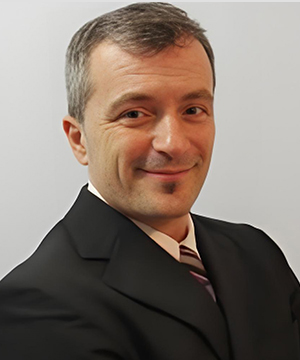
Carlos M. Travieso-González: Professor, Signals and Communications Department (DSC), Institute for Technological Development and Innovation in Communications (IDeTIC), University of Las Palmas de Gran Canaria (ULPGC), Las Palmas de Gran Canaria, Spain.
Research field: Biometrics; Biomedical Signals; Data Mining; Classification System; Signal and Image Processing; Environmental Intelligence.
Prof. Carlos M. Travieso-González received the M.Sc. degree in 1997 in Telecommunication Engineering at the Polytechnic University of Catalonia (UPC), Spain; and a Ph.D. degree in 2002 at the University of Las Palmas de Gran Canaria (ULPGC-Spain). He is a Full Professor and Head of the Signals and Communications Department at the University of Las Palmas de Gran Canaria (ULPGC). He has been a faculty member at ULPGC since 2001, teaching signal processing, biomedicine, pattern recognition, and learning theory. His research interests encompass biometrics, biomedical signal and image processing, data mining, classification systems, machine learning, and environmental intelligence. He has researched in more than 53 International and Spanish Research Projects, some of them as head researcher. He is co-author of 4 books, co-editor of 25 Proceedings Books, and Guest Editor for eight JCR-ISI international journals and up to 24 book chapters. He has over 510 papers published in international journals and conferences (112 indexed on JCR – ISI - Web of Science). He has published 7 patents in the Spanish Patent and Trademark Office. He has been a supervisor on 13 PhD Thesis (7 more are under supervision) and 150 Master Thesis. He is the founder of The IEEE IWOBI conference series and President of its Steering Committee, The InnoEducaTIC conference series; and The APPIS conference series. He is an evaluator of project proposals for the European Union (H2020 and Horizon Europe), Medical Research Council (MRC – UK), Spanish Government (ANECA and AEI), Research National Agency (ANR – France), DAAD (Germany), The Ministry of Investments at Slovak Republic (MIRDI), Latvian Council of Science (LZP), Croatian Science Foundation (HRZZ), Expert for MSCA (Slovenia, France), Argentinian Government and Colombian Institutions. He has been a reviewer in different indexed international journals (<70) and conferences (<270) since 2001. He has been a member of the IASTED Technical Committee on Image Processing since 2007 and a member of the IASTED Technical Committee on Artificial Intelligence and Expert Systems since 2011. He will be APPIS 2027 General Chair and was General Chair in APPIS 2026, CAIP 2025, APPIS 2025, APPIS 2024, APPIS 2023, APPIS 2022, APPIS 2020, IEEE-IWOBI 2020, APPIS 2019, IEEE-IWOBI 2019, IEEE-IWOBI 2018, APPIS 2018, InnoEducaTIC 2017, IEEE-IWOBI 2017, IEEE-IWOBI 2015, InnoEducaTIC 2014, IEEE-IWOBI 2014, IEEE-INES 2013, NoLISP 2011, JRBP 2012 and IEEE-ICCST 2005.
-

Alan Wang: Associate Professor, University of Auckland, New Zealand.
Research field: Bioengineering; Signal Processing; Data Informatics; Machine Learning; Biomedical Statistics and Simulation.
Alan Wang is a principal investigator and Associate Professor at University of Auckland. He has more than ten years of research experience in bioengineering informatics and integrated medicine, especially in advancing the role of medical informatics in health care. He has developed advanced data analytics methods for intelligent health and personalized diagnosis and prognosis based on signal processing and machine learning theories. He has experience analyzing huge cohorts of data with applications of early diagnosis, disease understanding, and effective treatment of patients with different disorders. He serves as an Editorial Board Member and an Active Reviewer for several international journals.
-

Photograph Here: Professor, Military Medical Academy, Serbia.
Research field: Urinary Screening; Chemical Carcinogens; Malignant Diseases; Non-communicable Diseases.
Prof. Radosavljević invented, formulated, and published: 1) Radosavljević's urinary screening of biomarkers of chemical carcinogens; and 2) the Radosavljević–Belojević method of epidemic differentiation. He graduated (1991), specialized (1995), and received his doctorate (1999) in epidemiology at the Medical Faculty of the University of Belgrade, Serbia. He was the head of the Department of Epidemiology and deputy director of the Military Institute for Preventive Medicine in Belgrade from 2003 to 2010, and head of military preventive medicine from 2010 to 2020 in the Ministry of Defense of Serbia. In 2020 he moved to the Institute of Epidemiology of the Military Medical Academy, Belgrade, where he works as an expert epidemiologist. He was a professor at the Biological Weapons course at the Military Academy of the University of Defence in Belgrade and a research associate at the Epidemiology course. Since 2015, Dr. Radosavljević has been a United Nations expert on biological weapons within the mechanism of the United Nations Secretary General.
-
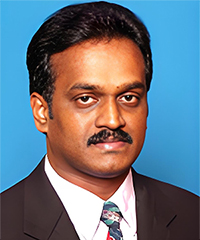
Sasidharan Sreenivasan: Associate Professor, Universiti Sains Malaysia, Malaysia.
Research field: Medicinal Plants; Mirna; Nanoparticle; Natural Products; Health and Disease Management; Toxicity Study.
Sasidharan Sreenivasan obtained his Ph. D. in 2007 from Universiti Sains Malaysia, Malaysia. He was served as the Deputy Director at Institute for Research in Molecular Medicine, Universiti Sains Malaysia from 2019 till 2021. He has over 220 publications with a total impact factor of > 250 (With more than 6589 citations in Scopus and h-Index = 42), published 16 chapters in book with international publishers, as well as Keynote, Invited Speaker and Chair of International & National Congresses. Has been serving as an Editor, Editorial Board Member, reviewer of international journals and evaluator for national and international grants. He has been recognized nationally and internationally as an expert in Pharmacognosy, Pharmacology, and anticancer studies, especially those that involve the pharmacological activity of medicinal plants. He was selected as a Top Research Scientists Malaysia (TRSM) by the Academy of Sciences Malaysia (ASM) in the year of 2022. In 2020, 2021, 2022, and 2023, he was figured among the top two percent (2%) scientists in a global list compiled by the prestigious Standford University from the United States of America. He reviewed more than 574 (Publoans) manuscripts for international journals. In 2019, he was placed in the top 1% of reviewers in Pharmacology and Toxicology, Clinical Medicine, and Cross-Field on Publons global reviewer database, United States of America. His research interests include medicinal plants, miRNA, nanoparticle and their role in Health and Disease Management, particularly natural products and nanoparticles (Green Carbon Dots) based antimicrobial, antioxidant, and anticancer agent development and toxicity study in cellular, genomic and animal model.